


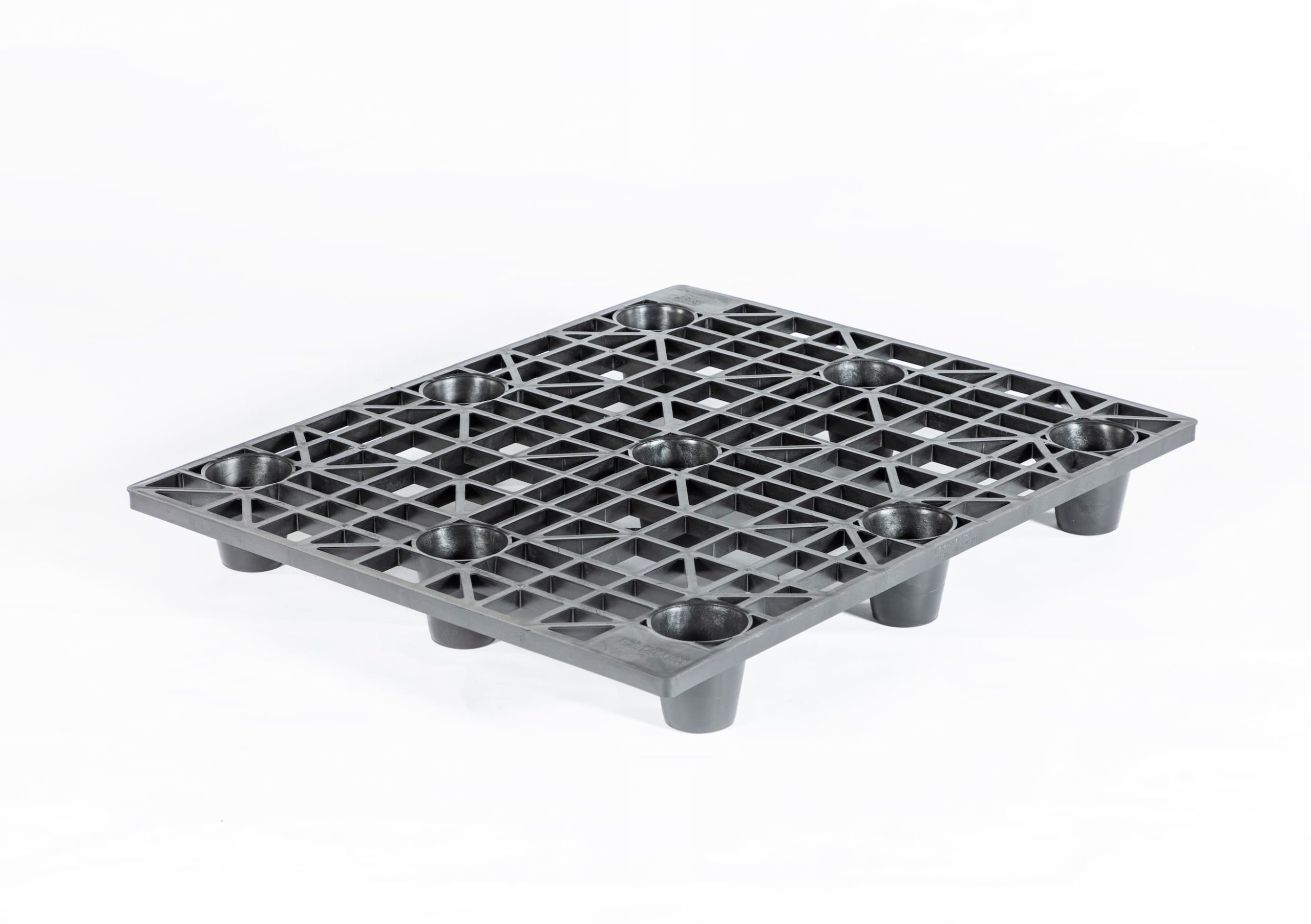
When you ship goods overseas, what happens to your pallets after your customer unloads them? Do they keep them, or do you arrange to have them sent back to Australia? For some businesses, buying new pallets for each shipment costs less than bringing empty ones home. For others, using the same pallets several times can help save money.
Key takeaways:
- One-way pallets are useful when getting empty pallets back is too expensive or difficult.
- Returnable pallets may save money if you ship regularly to the same customer.
- Your overseas customers can still reuse one-way pallets.
- Returning pallets involves extra costs, including freight, storage and cleaning.
- Always agree with your customer on what happens to the pallets before you ship.
What Is the Difference Between One-Way and Returnable Pallets?
A one-way export pallet stays at its destination after you deliver your goods. Your customer can keep it, reuse it or arrange to recycle it. You do not expect it back. A returnable pallet comes back to your business so you can use it for another shipment.
For example, a food manufacturer in Australia might send products to a distributor in Singapore every month. Once the goods are unloaded, the distributor collects the empty pallets and sends them back to Australia. The manufacturer then uses them for another shipment. When the same pallets move back and forth between businesses, this is known as a closed loop pallet system.
| One-Way Pallets | Returnable Pallets | |
|---|---|---|
| After delivery | Stay with your customer | Come back to your business |
| Return freight | Not needed | Needs to be arranged |
| Reuse | Your customer can reuse them | Your business can reuse them |
| Storage | No need to store pallets for return | Your customer needs space to store empty pallets |
| Suitable for | Shipments where returning pallets is difficult | Regular shipments with a reliable way to return pallets |
When Should You Use One-Way Export Pallets?
One-way pallets are useful if you ship goods to several customers in different countries. Suppose you manufacture packaged food in Australia and sell your products to distributors in Japan, Singapore and South Korea. Each customer receives a different number of pallets at different times of the year.
Arranging to collect empty pallets from each country could cost more than buying new ones. With one-way pallets, you do not need to organise return transport or ask your customers to store empty pallets until they can be collected.
Our ExPod-1210 is designed for one-way export shipping. It weighs just 8kg and can carry up to 400kg while being moved. The empty pallets also fit inside one another, much like a stack of cups. This saves space in your warehouse before you load them with goods. If you are shipping heavier products, our Expal range offers higher weight limits.
When Should You Use Returnable Export Pallets?
Returnable pallets are worth considering if you regularly send goods to the same customer and have an affordable way to get the pallets back. For example, your overseas customer may already send other goods to Australia. If there is room in their shipping containers, they may be able to send your empty pallets back with those goods.
You can then use the pallets again instead of buying new ones for every shipment. However, you need to consider how long the pallets will be away. If you send goods every month but your pallets take three months to come back, you will need enough spare pallets to cover those shipments. You also need to account for pallets that are lost or damaged along the way.
Are One-Way Pallets Cheaper Than Returnable Pallets?
It depends on how much you pay for the pallets and how much it costs to bring them back. Say you buy a one-way pallet for $20. You use it once and leave it with your customer. Your pallet costs you $20 for that shipment. Now say you buy a returnable pallet for $40 and use it five times. Each time you bring it back, you pay $10 in return freight.
| Cost | One-Way Pallets | Returnable Pallet |
|---|---|---|
| Number of shipments | 5 | 5 |
| Pallet purchases | $100 | $40 |
| Return freight | $0 | $40 |
| Total cost | $100 | $80 |
| Pallet cost per shipment | $20 | $16 |
In this example, the returnable pallet saves you $4 per shipment before cleaning, storage and other costs. But if the return freight costs $20 each time, the returnable pallet would cost $24 per shipment. Buying one-way pallets would then be cheaper. Before making a decision, ask your freight company how much it would cost to bring empty pallets back to Australia. You can also read our guide on the costs of buying and using plastic pallets.
What Should You Agree on With Your Customer Before Shipping?
If you want your pallets back, make sure your customer knows this before your first shipment.
Agree on the following:
- Who pays to send the empty pallets back?
- Where will your customer store them?
- How often will the pallets be returned?
- Who pays for lost or damaged pallets?
- Who keeps track of how many pallets are sent and returned?
Keep a record of the number of pallets you send with each delivery. If you send 100 pallets overseas and only receive 80 back, you may need to buy another 20 to make up the difference. If this happens regularly, it could cost you more than using one-way pallets.
Can Plastic Export Pallets Be Reused?
Yes. You can reuse plastic export pallets if they are still in good condition and can safely carry your goods. Before loading them again, check for cracks, broken parts or other damage. You should also make sure they are clean. This is especially important if you manufacture or ship food, drinks, medicines or health supplements.
All three of our export pallet models can be washed with hot water, cleaned with steam or sterilised using suitable chemicals. Always follow the cleaning instructions for your pallets and the hygiene rules for your products. Another benefit of plastic pallets is that they do not require ISPM 15 treatment. These are international rules that help stop insects and other pests from travelling between countries inside wooden packaging.
If you use timber pallets, the Australian Department of Agriculture, Fisheries and Forestry allows treated and correctly marked pallets to be exported again if they have not been altered. Whichever material you choose, check the import rules of each country before shipping.
Which Ozkor Export Pallet Should You Choose?
We supply three plastic export pallet models. Each has a different weight limit, size and design.
| Ozkor export pallet | Empty pallet weight | Published weight limit | Suitable for |
|---|---|---|---|
| ExPod-1210 | 8kg | 400kg while moving | Lighter one-way export shipments |
| Expal-1140 | 8.2kg | 1,000kg while moving | Heavier shipments and ongoing warehouse use |
| Expal-1100 | 7.5kg | 1,000kg safe working load | Export shipments, refrigerated containers and light industrial use |
Our ExPod-1210 is a good option if you have limited storage space. Four empty pallets fit into roughly the space of one. Our Expal-1140 and Expal-1100 stack on top of each other instead. You can learn more about these designs in our guide to nestable and stackable plastic pallets.
The Expal-1140 can also hold up to 500kg on warehouse racks supported by metal beams, as long as the weight is spread evenly. It must not be used in drive-in racking. All three models are made from recycled plastic and can be recycled at the end of their useful life where suitable recycling facilities are available. If you want to use your export pallets several times, speak to our team about which model is suitable for your goods and shipping arrangements.
Need Help Choosing Your Export Pallets?
At Ozkor, we supply plastic export pallets to Australian businesses shipping goods overseas. Whether you export food, medicines or manufactured goods, we can help you choose a pallet based on the weight of your products, how you ship them and what happens to the pallets after delivery. Call us on 1800 001 433 or request a quote online.
Frequently Asked Questions
Can one-way export pallets be used more than once?
Yes. One-way means you do not expect the pallet to come back. Your customer can still use it again if it is in good condition and suitable for their goods.
Can I bring empty plastic pallets back to Australia?
Yes, provided they meet Australia’s import requirements. Make sure the pallets are clean and free from soil, insects and other unwanted material. You can check the requirements through Australia’s Biosecurity Import Conditions system (BICON).
How many times can I reuse a plastic export pallet?
There is no set number of trips. It depends on the weight of your goods, how the pallet is handled and whether it becomes damaged. Check each pallet before using it again.
Do returnable plastic pallets need an ISPM 15 stamp?
No. ISPM 15 applies to wood packaging. Plastic pallets do not need this treatment or stamp, even when used for several international shipments.
Are one-way or returnable pallets better for food shipping?
Either can work. If you ship food to many overseas customers, one-way pallets may be easier to manage. If you ship regularly to the same customer, returning and reusing pallets may save money. Both options need to meet your food hygiene and handling requirements.
Can my overseas customer recycle Ozkor’s export pallets?
Yes. All three of our export pallet models are recyclable. Your customer will need to check whether their local recycling facilities accept the type of plastic used in the pallets.