


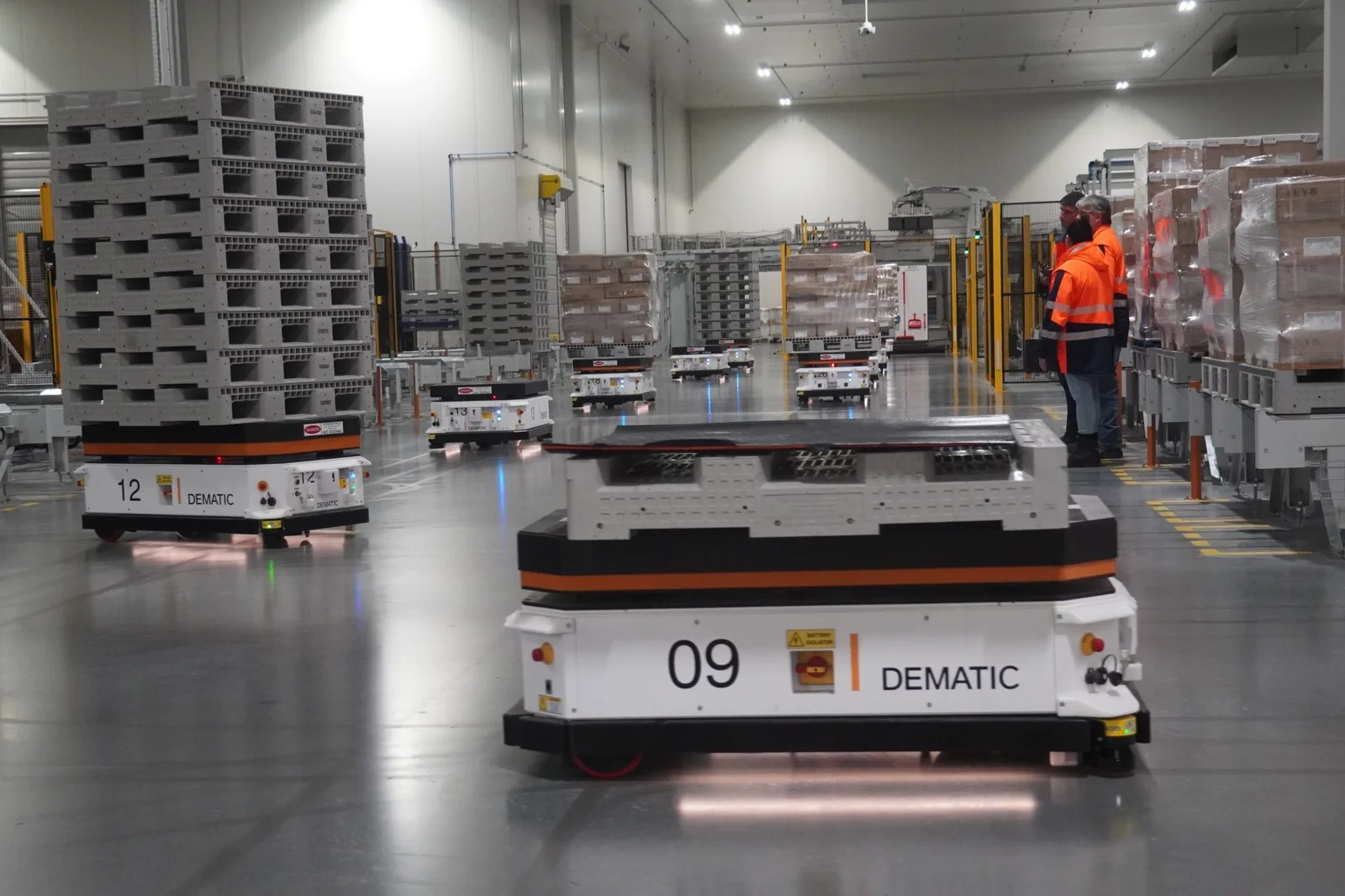
Key takeaways: Heat treated pallets add cost to every export, yet they don’t guarantee a problem-free shipment. Pests can survive treatment, and even a stamped, heat treated pallet can develop mould in transit. When that happens, you may face extra treatment costs, disposal fees, delays, or outright refusal at the border. Plastic pallets avoid these risks. They are exempt from ISPM 15, so there’s no heat treatment or fumigation required, making them a simpler, more reliable alternative to heat treated pallets.
What are heat treated pallets, and what are the other approved treatments?
Heat treated pallets are wooden pallets heated to a set core temperature for a required time to kill pests and other harmful organisms. This treatment is required under ISPM 15, the international standard for wood packaging used in export.
In Australia, export timber pallets must be treated under the Australian Wood Packaging Certification Scheme (AWPCS) using one of four approved methods: heat treatment, dielectric heating, methyl bromide fumigation, or sulfuryl fluoride fumigation.
| Code | Treatment | How it is done | Key considerations |
|---|---|---|---|
| HT | Heat treatment | Timber is heated until its core reaches at least 56°C for 30 continuous minutes. | Core temperature must be measured. Heat treatment does not prevent future mould growth, as the timber may still retain moisture. |
| DH | Dielectric heating | Electromagnetic energy heats the entire wood profile, including the surface, to at least 60°C for one continuous minute. | The wood must not exceed 20 cm across its smallest dimension, and the target temperature must be reached within 30 minutes of starting treatment. |
| MB | Methyl bromide fumigation | Timber is fumigated under a prescribed schedule at a minimum temperature of 10°C for at least 24 hours. | Specified fumigant concentrations must be maintained. Bark must be removed before treatment. |
| SF | Sulfuryl fluoride fumigation | Timber is fumigated under a prescribed schedule at 30°C or above for 24 hours, or 20°C or above for 48 hours. | Required gas concentrations and treatment conditions must be met. Bark must be removed before treatment. |
Can heat treated pallets still grow mould?
An ISPM 15 stamp shows that timber was treated for pests, not that it is dry. The heat treatment schedule is set by core temperature and time (56°C for at least 30 minutes), not by moisture content, so a stamped pallet can still carry moisture when it is loaded. In a sealed container, that moisture can condense as temperatures change and lead to mould.
Blackmores found mould on its new timber pallets during a pre-export inspection and couldn’t ship them. For a health brand, the risk was clear: mould could contaminate products, breach hygiene standards and damage its reputation.
What does each option cost an exporter?
Heat treated pallets cost less upfront, but the pallet price is only part of the bill. Treatment adds $5 to $15 per pallet, according to the AusPallets price index, with exact costs depending on the provider, method and volume. Every pallet also needs a valid ISPM 15 stamp, and a missing stamp or signs of pests can delay your shipment and add further costs.
Plastic pallets cost more to buy, but they need no treatment or stamp. That means no per-pallet treatment fees and fewer compliance risks, so your ongoing export costs are lower and more predictable.
| Heat treatment | Fumigation | Plastic | |
|---|---|---|---|
| Per pallet cost | Heat treatment adds $5-$15 per new pallet, or $8-$20 per used pallet. | Varies by provider. Drivers are chemical, exposure time and certification | Higher unit price, with no treatment cost |
| Lead time | This can add time to treatment and delay your shipment. | This can add time to treatment and delay your shipment. | No treatment step, so no time added |
| Rejection risk | Treated pallets can still be contaminated, leaving your shipment at risk of rejection, disposal or refused entry. | Same | Clean, contamination-free plastic pallets are far less likely to be rejected at the border. |
Frequently asked questions
What is the difference between heat treated pallets and fumigated pallets?
Heat treated pallets (HT) use heat to eliminate pests, while fumigated pallets use methyl bromide (MB) or sulfuryl fluoride (SF) gas.
Do plastic pallets need ISPM-15 treatment?
No. ISPM-15 covers wood packaging, so plastic pallets are exempt from it. Your importing country can still set its own rules, so confirm with your importer.
Is timber or plastic better for the environment?
For repeat-use, closed-loop operations, plastic is usually better on a per-trip basis. For genuinely single-use shipping, timber can be lower impact. The honest answer depends on reuse.
Ready to order? Send Ozkor your requirements using the form below, and the team will recommend a suitable model.